
When you think of Salento, long sandy beaches, whitewashed villages and crystal-clear waters immediately come to mind. Yet there is a place where nature is still the absolute protagonist, far from the most crowded tourist routes. We are talking about Le Cesine Nature Reserve, one of the most important protected areas in Puglia.
Located in the municipality of Vernole, along the Adriatic coast between Lecce and Otranto, this WWF oasis protects one of the last remaining stretches of coastal wetlands in Salento. For those travelling by campervan, it is an interesting stop for discovering a different side of Puglia, shaped by wetlands, dunes, pine forests and Mediterranean scrub.

A Corner of Nature That Has Survived the Passage of Time
Before the major transformations of the 20th century, much of the Salento Adriatic coast was characterised by marshes, lagoons and wetlands. Le Cesine is one of the last remaining environments of this kind along the Salento coast.
The Le Cesine Nature Reserve and WWF Italy Oasis covers approximately 348 hectares and includes a variety of habitats: temporary ponds, Aleppo pine forests, holm oak woods, Mediterranean garigue and coastal marshes. This mosaic of different environments is the foundation of the area’s extraordinary biodiversity.
A Birdwatcher’s Paradise at Le Cesine Nature Reserve
One of the most fascinating aspects of Le Cesine is its location along one of the main bird migration routes. Throughout the seasons, around 180 bird species inhabit the different habitats of the reserve, making it a particularly interesting destination for birdwatching.
Possible sightings include herons, flamingos, black-winged stilts, marsh harriers, kingfishers and little egrets. For anyone interested in wildlife photography, the reserve offers a remarkable variety of subjects and landscapes throughout the year.

Among Dunes, Pine Forests and Mediterranean Scrub
Le Cesine is much more than wetlands. The entire protected area offers a surprising variety of landscapes.
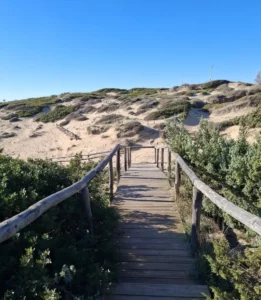
The coastal dunes form a natural barrier against marine erosion and are home to plant species adapted to challenging conditions. Behind them lie pine forests, woodlands and stretches of Mediterranean scrub, where lentisk, myrtle, juniper and many other species grow.
The botanical diversity is remarkable: WWF also records 32 species of wild orchids, some of which are of particular conservation interest.
A Perfect Experience for Vanlife
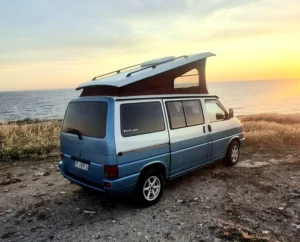
Those travelling by campervan often look for places away from mass tourism. Le Cesine is exactly this kind of destination.
It is not a place to rush through: the real value of the experience lies in the trails, landscapes, wildlife observation and silence. It is an ideal destination for nature photographers, families, hikers, cyclists and travellers looking for peace and quiet.
To learn more about respecting natural environments, you can also read our article Leave No Trace: 7 Rules for Travelling by Campervan While Respecting the Environment.
How to Visit Le Cesine Nature Reserve
The reserve can be visited throughout the year, but access is only permitted with one of the reserve’s guides, and booking is mandatory.
WWF currently lists guided visits on Sundays and public holidays at 10:00 am and 4:00 pm. For group visits during the week, you need to contact the reserve directly.
The entrance and visitor centre are located at Masseria Cesine, Vernole (LE).
Before planning your visit, it is always advisable to check the official WWF website for the latest opening times and access arrangements, as these may change.
What Is the Best Time to Visit Le Cesine?
Le Cesine is interesting in every season, but the best time depends on the experience you are looking for.
Spring: particularly interesting for vegetation, flowering plants and bird activity.
September and October: milder temperatures and generally fewer tourists, making conditions ideal for walking and photography.
Winter: a quieter atmosphere and good opportunities for those interested in birdwatching.
How to Visit Le Cesine Responsibly
Le Cesine is a fragile ecosystem. For this reason, it is important to behave responsibly and respect the environment:
- always stay on authorised trails
- avoid excessive noise
- do not pick plants or flowers
- do not disturb wildlife
- always take any rubbish with you
Following these simple principles helps protect one of Puglia’s most valuable natural environments.
A Side of Puglia You May Not Expect
Many travellers cross Salento in search of its most famous beaches. Le Cesine offers a completely different experience.
You don’t come here for beach clubs or entertainment. You come to observe nature as it still follows its own rhythm.
If you are planning a campervan trip through Salento, it is worth setting aside a few hours for a guided visit to the reserve and discovering this corner of nature away from the busiest tourist routes.
Le Cesine and Slow Travel
The true richness of Puglia is not found only in its most photographed places. It often hides in lesser-known corners, places that require time, curiosity and a desire to explore.
Le Cesine fits perfectly with this philosophy: stop, walk, observe and let the landscape set the pace of your journey.
If you are planning a Salento itinerary, you can also connect this stop with our 5-Day Campervan Itinerary from Bari.
Discover Le Cesine at the Right Pace
Le Cesine is located in the municipality of Vernole, just a few kilometres from Lecce, and can become a wonderful stop on a slow journey through Salento.
Plan your visit to the reserve, check the access arrangements on the official WWF website and discover Salento by campervan.