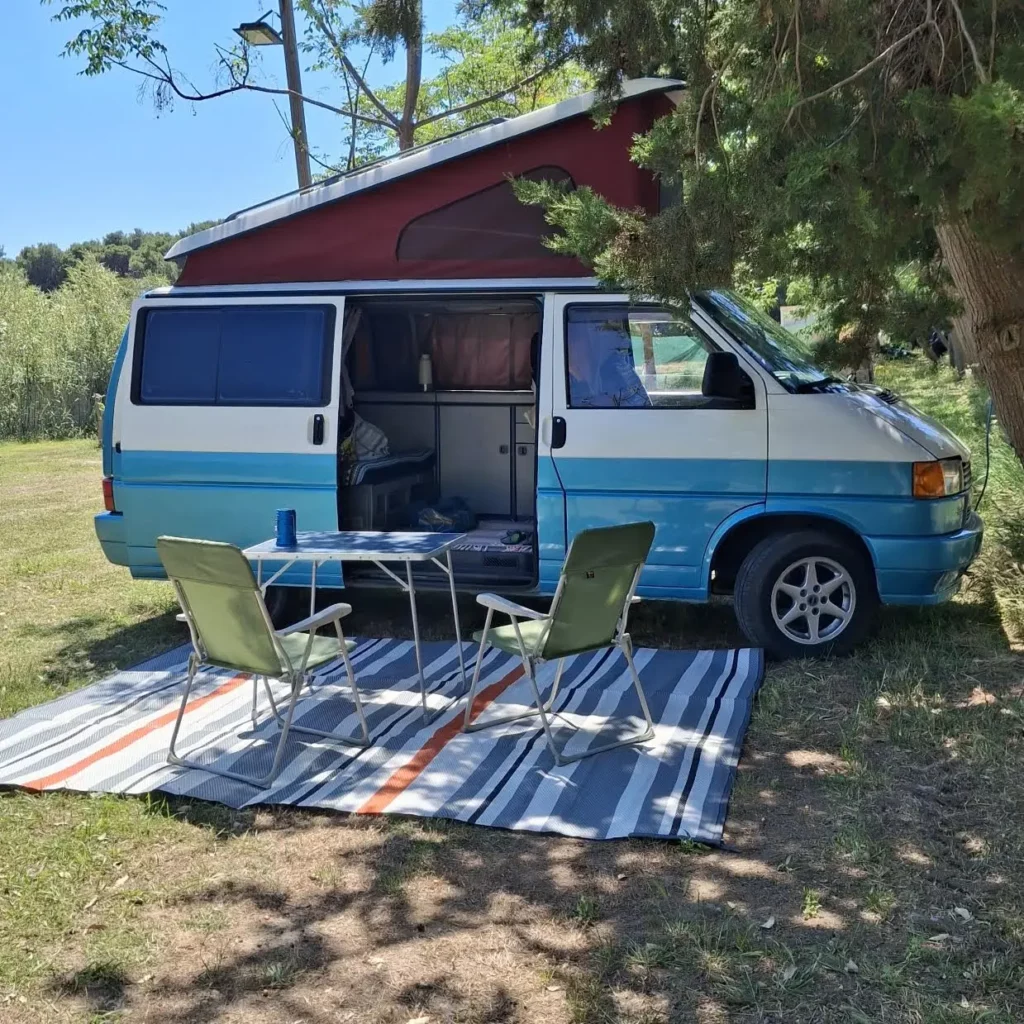
This is how we like to think of the campervan as a “democratic” way to travel: an experience whose value can depend more on the people and places we encounter than on the prestige of the vehicle. This doesn’t mean it fits every budget or is always cheaper than other types of holidays.
In this article
A little home with everything you need
In just a few square metres, you can drive, sleep, and cook. The same dinette serves different purposes throughout the day, the table becomes a place for breakfast and travel plans, and the cupboards encourage you to bring only what you need. This simplicity can become part of the joy of travelling.
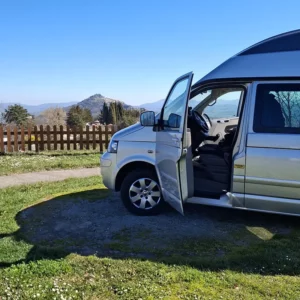
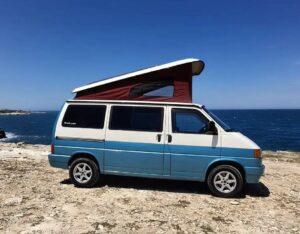
A Volkswagen California with a few years of history behind it can offer all this, provided it is well maintained. However, equipment, driving comfort, and space management vary between models. Choosing the right van also means understanding these differences, especially when travelling as a family.
Campervan holidays: how much does budget matter?
Having a kitchen and beds on board allows you to organise your spending differently. You can prepare dinner with fresh produce from a local market, alternate meals in the van with visits to traditional restaurants, and choose a nearby destination without having to change accommodation at every stop.
However, saving money is not automatic. Your budget should include rental or purchase costs, fuel, tolls, overnight stops, campsites, and any additional services. If you own the vehicle, you must also account for maintenance, insurance, and storage. The season, length of the trip, and number of travellers all make a difference.
For a first experience, renting allows you to try this type of holiday without purchasing a vehicle. Before booking, it is worth checking what the quote includes, along with the terms and conditions and any mileage restrictions. A few carefully chosen stops can help you plan a trip that suits the time and budget available.
Vintage campervans and sustainability: an honest perspective
Taking care of an object and continuing to use it means valuing its longevity. For those who love vintage campervans, repairing and preserving them are part of the relationship with the vehicle. However, this alone is not enough to demonstrate an environmental advantage over a more recent vehicle.
A diesel campervan consumes fuel and produces emissions. Its overall environmental footprint depends on many factors, including manufacturing, maintenance, fuel consumption, distance travelled, and the number of people on board. Slow travel is a choice of pace; it is not, in itself, a measure of emissions.
As the European Environment Agency explains on its page dedicated to transport and mobility, transport contributes to greenhouse gas emissions and air pollution. Talking about responsible travel therefore also means considering how far we travel and how we get around.
In practice, we can choose an area to explore at a leisurely pace, avoid unnecessary journeys, and leave the van parked whenever we can continue on foot or by bicycle. We can use water and energy carefully, collect our rubbish, and use designated facilities for waste disposal. These are practical steps that make a difference, without turning travel into a promise of “zero impact”.
To learn more about these practices, explore our blog post on the seven Leave No Trace principles for travelling by campervan while respecting the environment.
Freedom also means respecting the places we visit
Travelling by campervan offers flexibility, but it also requires planning. Before each stop, it is useful to identify suitable places to stay overnight and access the services you need, checking availability and conditions in advance. An enjoyable stop is also one that respects the people around us and the place welcoming us.
Staying longer can become an opportunity to discover a local shop, buy regional produce, or return to the same trail in a different light. In Puglia, among villages and countryside, your journey can find its own rhythm without a packed itinerary of destinations.
The value of sharing a small space
Whether travelling as a couple, with friends, or as a family, life on board calls for cooperation. You make the bed, share the kitchen, and find a place for every item. You need to agree on timings and make room for everyone’s needs. It isn’t always easy, but it can make the journey a more shared experience.
Perhaps the democratic nature of campervan travel lies precisely here: in reminding us that a meaningful experience can grow out of simple habits. A meal cooked together, a walk, an unhurried evening. Freedom takes shape in everyday choices, long before it appears in a list of accessories.
If this way of travelling sounds like you, discover the campervans in the VanLife Puglia fleet and choose the vehicle that best suits your journey.