The Fortified Masserie of Puglia: History, Architecture, and the Most Beautiful Ones to Visit
Anyone traveling through Puglia will inevitably come across charming stone buildings surrounded by centuries-old olive groves, dry-stone walls, and endless countryside.
These are the masserie, the traditional farm estates that have shaped the region’s rural landscape for centuries.
Some of them, however, tell an even more remarkable story: that of the fortified masserie. Watchtowers, defensive walls, drawbridges, and arrow slits reveal that these buildings were not only agricultural estates but also places of refuge in a land that, for centuries, faced invasions, pirate raids, and military conflicts.
Today, many fortified masserie have been carefully restored and stand as some of the most fascinating examples of Puglia’s rural heritage. For campervan travelers, visiting them is a wonderful way to explore the countryside, discover the region’s history, and experience its rich agricultural traditions.
What Are Fortified Masserie?
Historically, the masseria was the heart of rural life in Puglia. These estates were where cereals were cultivated, olive oil was produced, livestock was raised, and the daily work of the countryside was organized.
Between the 16th and 18th centuries, many masserie were transformed into small fortresses. During this period, Puglia’s coastline was frequently threatened by pirate raids from the eastern Mediterranean and attacks by Ottoman fleets. To protect people, animals, and valuable harvests, landowners began equipping their estates with increasingly sophisticated defensive features.
This gave rise to the fortified masserie that still define much of Puglia’s countryside today.
How to Recognize a Fortified Masseria
Even without any architectural knowledge, it’s easy to spot the defensive elements that distinguish these unique buildings. Common features include:
Watchtowers
High perimeter walls
Protected inner courtyards
Arrow slits for defense
Monumental entrances designed for easy control
Removable staircases or drawbridges
Rooftop terraces used for surveillance
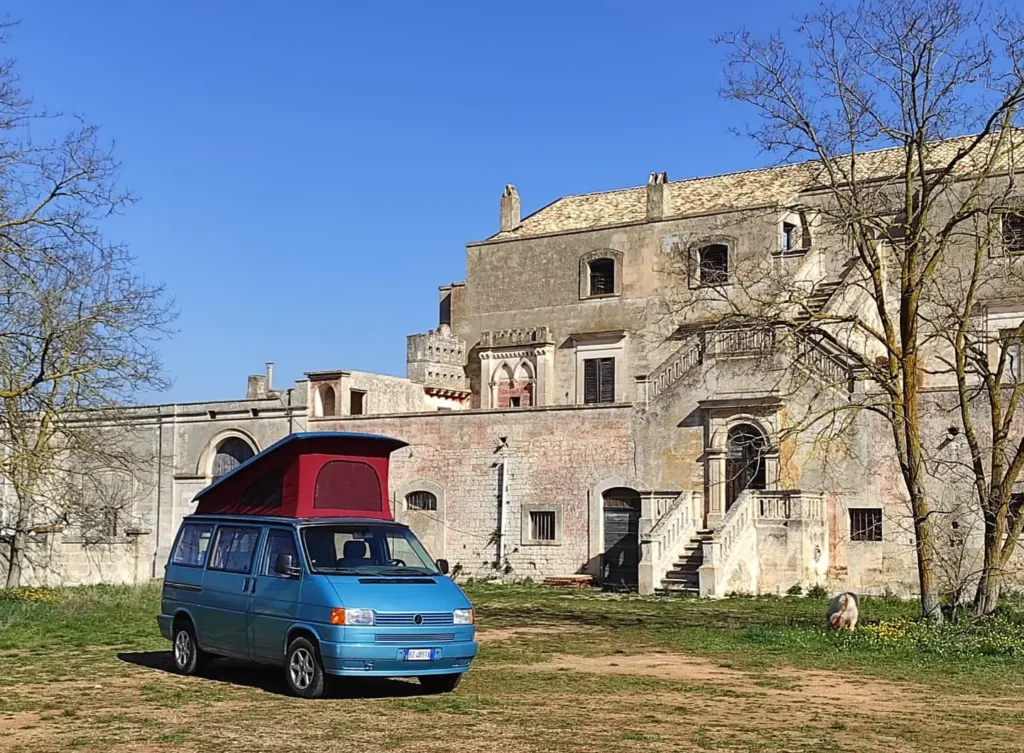
Many fortified masserie resemble small rural castles set amid olive groves and farmland.
A Network of Rural Defenses
Fortified masserie were never isolated buildings. They formed part of a wider defensive network across the region.
Coastal watchtowers alerted inland settlements to approaching threats from the sea, allowing nearby masserie to prepare and protect their residents, livestock, and crops.
This coordinated system played a significant role in shaping the agricultural landscape that still characterizes Puglia today.
The Most Beautiful Fortified Masserie to Visit
Masseria Brancati — Ostuni
One of the oldest masserie in the Itria Valley, Masseria Brancati preserves a magnificent underground olive mill and monumental olive trees that are more than a thousand years old. A visit offers a fascinating insight into the relationship between rural architecture and olive oil production.
Masseria San Domenico — Fasano
Located close to the Adriatic Sea, this elegant estate was built around a 15th-century coastal watchtower once used to spot pirate raids. Today it is considered one of the finest examples of the restoration of Puglia’s historic rural architecture.
Masseria Torre Maizza — Savelletri
Its most distinctive feature is the imposing fortified tower overlooking the surrounding countryside. From this strategic position, it was possible to monitor both inland routes and the nearby coastline.
Masseria Montalbano — Ostuni
One of the most atmospheric fortified masserie in northern Salento, its central tower is a powerful reminder of the defensive role these estates once played.
Masseria Li Foggi — Gallipoli
Located in the Salento region, this estate is one of the finest examples of fortified rural architecture closely connected with traditional farming and pastoral life.
The Masserie and Olive Oil
Many fortified masserie served as important centers of olive oil production.
Their grounds often included underground olive mills, storage rooms, and large cisterns used to preserve one of Puglia’s most valuable agricultural products.
In Puglian culture, the olive tree has always represented far more than a source of food. For centuries, it symbolized wealth, prosperity, and social status. The value of an estate was often measured by the number of olive trees it contained, making their silvery canopies a true sign of a family’s prosperity.
Today, many masserie still preserve their original stone millstones and historic olive oil production facilities, which visitors can explore.
Staying at a Masseria
Over the past few decades, many masserie have been beautifully restored and converted into boutique accommodations.
Spending the night at a masseria offers an authentic taste of rural Puglia, with experiences such as:
breakfasts featuring locally sourced products
peaceful surroundings among centuries-old olive trees
traditional Puglian cuisine
slow-paced living immersed in nature
For campervan travelers, these estates also make excellent stops for dinner, guided tours, or olive oil tastings.
The Masserie and the Landscape of Puglia
Looking across the Puglian countryside, it’s easy to understand how these estates have shaped the region for centuries.
The masserie were the economic and social heart of rural communities, and many of Puglia’s culinary, agricultural, and cultural traditions were born within their walls.
A Heritage Worth Preserving
The fortified masserie tell a story of hard work, resilience, defense, and ingenuity.
They stand as lasting evidence of a region that transformed centuries of challenges into a unique agricultural and social system unlike any other in the Mediterranean.
Visiting a masseria is about much more than admiring a historic building.
It is an opportunity to connect with the true soul of Puglia.
Among white limestone walls, ancient olive groves, the sound of cicadas, and peaceful courtyards, you can discover the history that has shaped this extraordinary region for generations.
The most beautiful masserie are often found away from the main roads. With a campervan, you can reach them at your own pace, stop for an olive oil or local food tasting, and continue your journey whenever you’re ready.